When I started this website in 2017, I called it No Books? No Problem. At the time, the name described quite literally something I was trying to do in my classes: create learning experiences that did not necessarily depend on a textbook.
I was teaching languages, particularly English and Chinese, and I was constantly making my own materials. Sometimes I needed a worksheet. Sometimes a game worked better. Sometimes students needed to listen, speak, move things around, write characters, play with words or interact with something on a screen. If the resource I needed did not exist, I tried to make it.
That was the original idea behind this website.
Over the years, however, something happened. The website grew with my teaching.
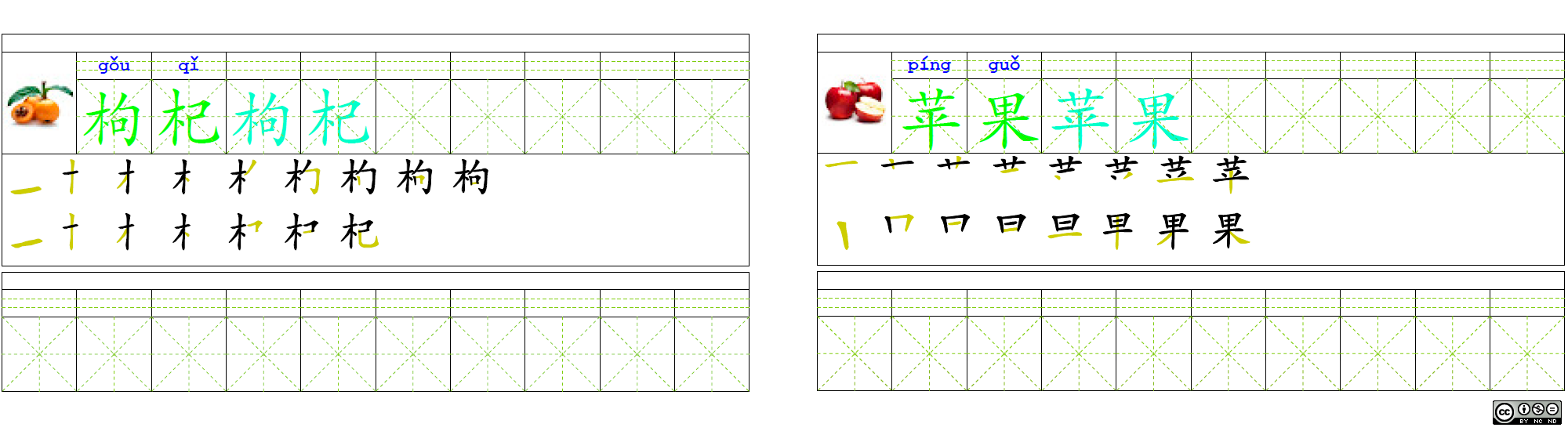
Primary students brought Chinese vocabulary activities, pinyin exercises, conversations and writing practice. Other classes brought English songs and projects. Secondary education added music, rhythm, art and new ways of combining subjects. Games became printable games, board games, web activities and videogames. Later came audio stories, interactive activities and virtual environments.
The result was a website containing many different things.
For a long time, I thought that was the problem.
A website or a drawer?
After almost ten years, I recently started looking through the whole website again. Page by page, activity by activity, I found things I had almost forgotten making.
At first, my impression was that the site had become something of a drawer: materials from different schools, different students, different subjects and different periods of my professional life had accumulated in the same place.
And, to some extent, that was true.
The structure of the website reflected the question I had been asking whenever I created something:
Where should I put this?
Activities went into Activities. Games went into Games. Other things went into Materials. Classes were divided by age or educational level. This was useful when the website was mainly a place where my students could find what we were using in class.
But years later, another question seems more useful:
Why did I make this?
That question changes the way I see many of these old materials.
Creating what learning needs
Looking back, the common element is not Chinese, English, games, technology or any particular school subject.
It is a way of responding to teaching problems.
If young learners of Chinese did not need a conventional textbook, I could create a different collection of resources for them. If vocabulary could be practised through a game, I could design and make the game. If an activity needed an environment that did not exist, perhaps I could draw it. If a story could connect English listening practice with paintings from the Prado Museum, I could combine narration, art, music and sound. If a grammar point could be remembered more easily through a song, I could write one and bring my guitar into the classroom.
One project made this particularly clear to me. For a virtual-tour activity, I needed 360-degree images but did not have a 360-degree camera. So I drew the environments myself as equirectangular panoramas and then turned them into an interactive virtual space.
The technology was useful, but the technology was not the starting point.
The learning need came first.
I think this explains much better what No Books? No Problem eventually became.
It was never really about being against books. I use books, and books can of course be excellent learning tools. The point was that the book did not have to determine what was possible in the classroom.
A book can be the right tool. So can a conversation, a piece of cardboard, a song, a game, a drawing, a computer, a physical object or something that has to be invented for one particular group of learners.
What should this website be now?
By 2016, my approach to teaching had already changed considerably. In 2017, I started this website as a place to put some of those ideas into practice and document what I was creating. Since then, both my teaching and my professional context have continued to evolve.
Inevitably, some resources on this website belong to classrooms that no longer exist. Others are still being used. Some have become technically obsolete, while the ideas behind them remain interesting. And some old activities now seem more valuable to me as evidence of a teaching process than as resources to download.
So I have decided not to erase the old website and start again. Instead, I am reorganising it.
The new site will try to distinguish between three things that had gradually become mixed together: my current teaching, projects that document how I design learning experiences, and resources that students can actually use. A notebook will also give me a place to reflect on what happens while teaching and designing those experiences.
This means that some old pages will disappear from the main navigation but not necessarily from the website. Some resources will move. Some projects will be reconstructed and explained. And No Books? No Problem itself will no longer need to carry the weight of being the name for everything I do.
Ten years later
I originally thought that reorganising this website would mainly involve deciding what to delete.
Instead, reviewing it has made me realise that its disorder contains a record of how my teaching developed.
There are experiments that worked and others that probably would not be designed in the same way today. There are technologies I would no longer choose. There are materials made for very specific groups of students. But together they document something that I would like to preserve: a willingness to learn new things in order to create different possibilities for learners.
So No Books? No Problem is not disappearing.
It is simply finding its place.
Ten years later, I would probably express its original idea differently:
Teaching is also about creating what learning needs.
And that seems like a good place from which to begin again.